
Introduction
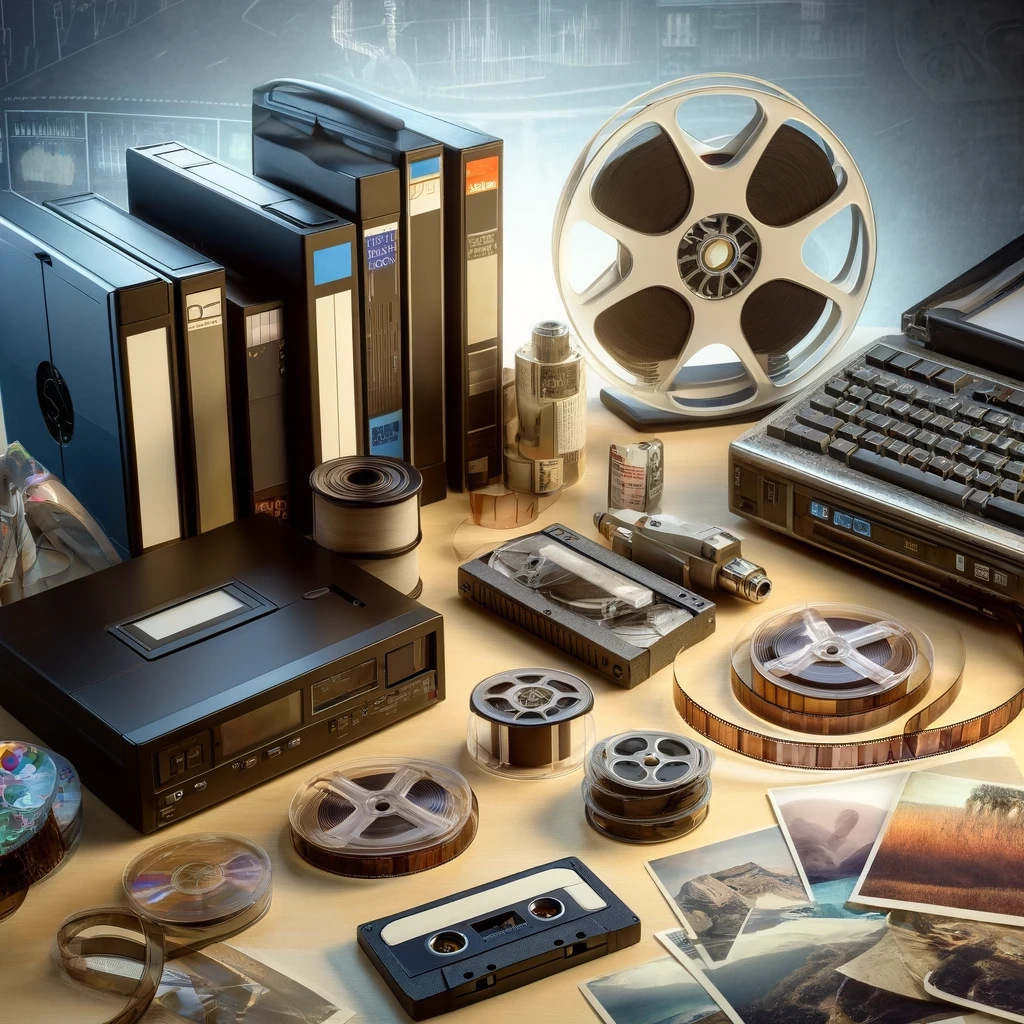
In the digital age, preserving your memories and important documents has never been easier. However, the journey to digitization often begins with understanding the various media formats that have been used over the years. Each format presents its own set of challenges and benefits when it comes to digitizing. In this blog post, we will explore some of the most common media formats and provide insights into the process of digitizing them.
VHS Tapes
Challenges:
- Degradation: VHS tapes are prone to physical degradation over time, leading to loss of quality.
- Bulky: These tapes take up significant physical space.
- Obsolete Equipment: VHS players are becoming increasingly rare, making playback difficult.
Benefits of Digitizing:
- Preservation: Digitizing VHS tapes ensures that your videos are preserved in their current state and protected from further degradation.
- Convenience: Digital files are much easier to store, organize, and access.
- Compatibility: Once digitized, your videos can be viewed on modern devices without the need for outdated equipment.
Betacam
Challenges:
- Professional Format: Betacam was primarily used in professional settings, meaning it requires specialized equipment for playback and digitization.
- Deterioration: Like VHS, Betacam tapes can degrade over time.
Benefits of Digitizing:
- Quality: Betacam tapes often contain high-quality recordings. Digitizing them preserves this quality and makes it accessible.
- Ease of Access: Digital files can be easily edited, shared, and stored.
- Space-saving: Digitizing frees up physical storage space.
Film Reels
Challenges:
- Fragility: Film reels are delicate and can be damaged easily.
- Playback Equipment: Film projectors are not commonly available, making playback difficult.
- Labor-intensive: The process of digitizing film reels is time-consuming and requires specialized equipment.
Benefits of Digitizing:
- Longevity: Digital files do not degrade over time like film can.
- Accessibility: Digital versions can be easily viewed and shared on modern devices.
- Editing: Digitized film can be edited to enhance quality or create new projects.
Audio Cassettes
Challenges:
- Magnetic Tape Degradation: Audio cassettes are susceptible to magnetic tape degradation, which can affect sound quality.
- Mechanical Issues: Cassette players can have mechanical issues that make playback difficult.
Benefits of Digitizing:
- Sound Preservation: Digitizing audio cassettes captures the sound in its current state, preventing further quality loss.
- Ease of Use: Digital audio files are easier to organize and play on modern devices.
- Portability: Digital files are portable and can be shared easily.
Photographs and Negatives
Challenges:
- Physical Damage: Photographs and negatives can be damaged by light, moisture, and physical handling.
- Storage Space: Large collections can take up significant physical space.
- Detail Loss: Over time, photographs can fade and lose detail.
Benefits of Digitizing:
- Quality Preservation: Digitizing preserves the current quality and detail of photographs.
- Accessibility: Digital images can be easily shared and viewed on various devices.
- Editing and Restoration: Digital images can be edited and restored to enhance their appearance.
Conclusion
Understanding the different media formats and the unique challenges they present is the first step towards successful digitization. By digitizing your media, you not only preserve precious memories and important documents but also make them more accessible and easier to manage. At Digify, we specialize in converting a wide range of media formats to digital, ensuring that your valuable content is preserved for future generations. Contact us today to learn more about our digitization services and how we can help you safeguard your media.